Most likely.
Beersmith has a tool for that:
"Backing Out the Original Gravity of a Finished Beer
This calculation, though rarely used, can actually estimate the original gravity of the beer using a final gravity measurement taken with both a refractometer and hydrometer. It is useful if you forgot to measure the original gravity up front. o Select “Fermenting wort gravity” as the calculation o Enter the refractometer reading for the finished beer (at room temperature - cool the sample before measuring) o Enter the hydrometer reading for the finished beer o The estimated original gravity will be displayed under “Corrected gravity”"
I wasn’t suggesting that judges calculate OG anyway. My point was really more focused on what I see as the core issue of the OP’s point for this thread: the INTENT of the brewer who entered the beer.
A brewery with an expensive Alton Parr beer analyser can give you the ABV, FG, and OG from finished beer. That was done for some of my beers way back when.
There are lots of very good points brought on both sides of this argument and if there is a practical way to implement changes to improve fairness in judging then all the major competition organizers would likely be open to adopting those changes. It is known that in competitions at both the commercial and hobby level that beers are slid by the entrant into categories where they will be the biggest in the class, even where they are out of style at the targeted style. We don’t know the intent of the entrant in this particular case. The brewer may have made an honest decision that the beer aesthetically resembled an 8B beer even if it had a higher OG than appropriate for the style. (Additionally, do we know whether the published recipes are adjusted for efficiency that may not have resembled the brewer’s personal version of the recipe?)
Judging is an inherently imperfect process and it is unreasonable to expect competitions to subject each beer to testing to ensure complicity with the style guidelines. Competitions, even large commercial competitions, do not have the equipment, time, or staff to test each beer. That is why competitions rely upon trained judges to apply the guidelines and assess the beers aesthetically. The judges are not perfect, sometimes the decision is wrong, but we have agreed to allow them to make the call.
The answer, for the OP, is to try again at the tasting exam and become a judge. If you believe that you would have accurately judged that beer as out of style in 8B you could have explained this to the other judges sitting your flight and maybe, just maybe improve the skills and knowledge of the BJCP judging corp a little bit to help avoid these situations in the future. If there is a bias in judging towards the biggest the only way to fix that is to call it out. just like any bias, until people start standing up and calling it out every time they see it nothing will change.
so kudos to you S. Cerv for calling this out but it’s even better to do it at the moment than after the fact. I get fed up all the time with notes on comp beers that clearly indicate the judge does not know what they are talking about and that’s why I am trying to become a judge myself. So that, at least when I am judging a beer I will be able to do my best to pick the best beer TO STYLE on the table and to help the other judges do the same.
you’re smart, perceptive, and driven. Don’t let fear of failure stop you from actually doing something to make this process better.
This is the crux of the issue.
If there’s someone who believes the rules should be changed, they should put forth a cogent argument for discussion.
This one on the main page is over the BJCP guidelines by .02 o;)AG24 Oktoberfest - Beer Recipe - American Homebrewers Association
It happens.
Try this for an example: putting a Surly Bitter Brewer ale against a Tetley’s Smoothflow. I prefer the Surly, as a beer, generally, and would bet it is judged superior as a beer by most folks, but even Todd the brewer would acknowledge that it is not to style, despite the ABV being close to or in the correct range. Should that win a competition for a bitter where style guidelines are used? No. I’m no style Nazi, but the argument for compliance with style guidelines boils down at some point to attempting in good faith to properly classify the beer when submitted, so it can be evaluated against the appropriate style guidelines and the other properly classified entrants. Should my reduction boiled 60 Schilling Scottish Ale be forced to compete (within the 60 Schilling subcategory) with a 70 Schilling Scottish Ale improperly entered as a 60; if so, what about a 90 Schilling?
That said, I don’t put it on the judges to catch something as minimally deviant as a higher than permitted ABV on a relatively low alcohol beer.
the attempt to properly classify a beer is good strategy for an entrant assuming the judges are doing their job. If you enter a beer that is too big/hoppy for the category it SHOULD get dinged for that. if it is still the best example on the table then it SHOULD win anyway.
I’ve not had the surly bitter but if it is out of style, regardless of your preference, and there is a beer that is more to style and of comparable quality the second beer should win. It’s the job of the judge to learn how to separate their personal taste preferences from their experience of the beers as hand. Personal preference will come into play during a best of show judging when it is generally agreed that all the remaining competetors are equally deserving of the win based on (the perception of) compliance to the guidelines.
the numbers just don’t come into it. there are errors in measurement, data entry, understanding, etc. that make it impossible to know for sure exactly what numbers a particular beer actually has.
^This^. Lots of potential small errors that could call the exact numbers into question. Which is why I have no qualms in entering a beer as to what it tastes most like when the OG is near the junction of 2 styles - I would never try to game the system, but if it tastes more like ‘A’ than ‘B’ to me and there is some overlap, then it’s up to the judges to agree or disagree with my assessment.
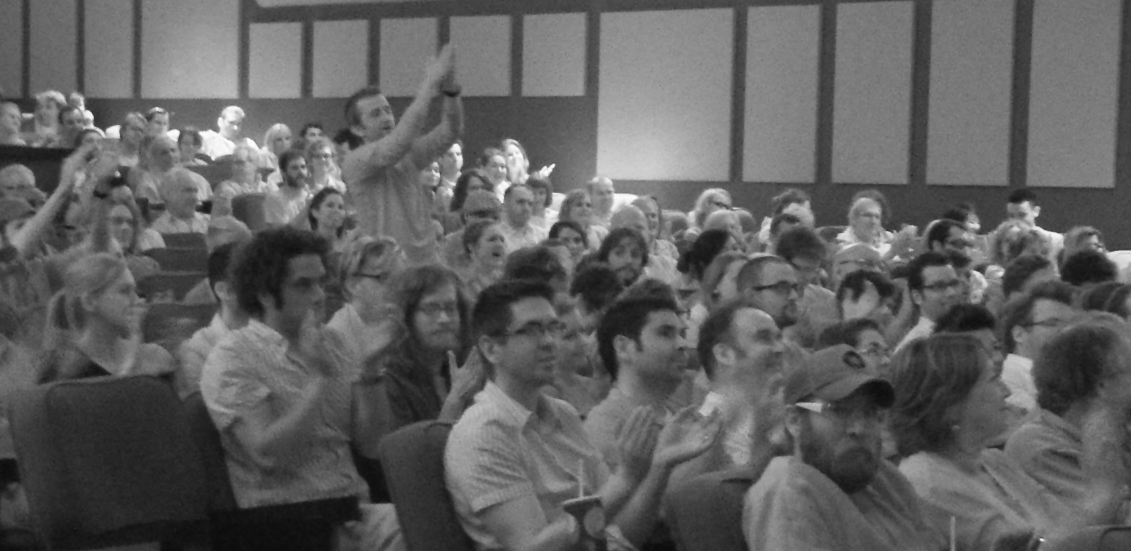
Denny? Third row, second from left
Not as far as I know, but I thought the same thing!
Yeah, that’s a pretty uncanny resemblance. Long lost brother ? ;D
I do think the guidelines are just guidelines, not rules (the new ones even state as much).
I don’t think S. cerevisiae’s posts are crazy. I think they’re interesting and often useful.
Hey, an old friend once told me that if two people always agree, one of them is lying. So its all good.
Just as a heads up, I’m planning my NHC brews and you can count on them pushing the envelope statistically. So if you plan on winning you better go big, cuz mine will be huuuuuuge.
I once entered an Imperial Kolsch (one of my first all grain batches that missed low on the volumes and I didn’t think to just cold sparge with some more water). It finished at 1.006 and one of the judges liked it but said it was underattenuated for a Kolsch…so watch for that!
I think the new introduction to the 2014 BJCP Style Guidelines tries to dispel the rigidity that some choose to use in their interpretation and application of the style guidelines. This is especially true for the notion that the vital statistics are absolutes.
I would highly recommend reading it in the current draft of the 2014 guidelines. Here are some key points:
[quote]The BJCP Style Guidelines are guidelines not specifications. Take those words at face value, or their plain meaning. Guidelines are meant to describe general characteristics of the most common examples, and serve as an aid for judging; they are not meant to be rigorously-applied specifications that are used to punish slightly unusual examples. They are suggestions, not hard limits. Allow for some flexibility in judging so that well-crafted examples can be rewarded. The guidelines are written in detail to facilitate the process of the structured evaluation of beer as practiced in homebrewing competitions; don’t take each individual statement in a style description as a reason to disqualify a beer.
[/quote]
This next one made me ;D
[quote]The Style Guidelines are not the Ten Commandments. The words in this document are not due to divine inspiration; they were written by people making a good faith effort to describe beer as it is perceived. Don’t treat them as some kind of Holy Scripture. Don’t get so lost in parsing the individual words that you lose sight of the overall intent. The most important part of any style is the overall balance and impression; that is, that the beer reminds you of the style, and is a nicely drinkable product. To get lost in the individual descriptions loses the essence of the style. The mere fact that style descriptions can change from one edition of the guidelines to the next should be the clearest illustration that the words themselves are not sacred.
[/quote]
…and about Vital Stats:
[quote] Keep in mind that these Vital Stats are still guidelines, not absolutes. They are where most examples fall, not every possible commercial example of a style. They help judges determine judging order, not whether an example should be disqualified.
[/quote]
This next one made me ;D
[quote]The Style Guidelines are not the Ten Commandments. The words in this document are not due to divine inspiration; they were written by people making a good faith effort to describe beer as it is perceived. Don’t treat them as some kind of Holy Scripture. Don’t get so lost in parsing the individual words that you lose sight of the overall intent. The most important part of any style is the overall balance and impression; that is, that the beer reminds you of the style, and is a nicely drinkable product. To get lost in the individual descriptions loses the essence of the style. The mere fact that style descriptions can change from one edition of the guidelines to the next should be the clearest illustration that the words themselves are not sacred.
[/quote]
…and about Vital Stats:
[quote] Keep in mind that these Vital Stats are still guidelines, not absolutes. They are where most examples fall, not every possible commercial example of a style. They help judges determine judging order, not whether an example should be disqualified.
[/quote]
[/quote]
Thanks! Those are all very relevant to this topic.
Its a beautiful thing!