Yes, Ragus neutralizes to a pH between 5 and 6 although it isn’t entirely clear if this is immediately after inversion or at the end of the process. I haven’t tested it yet. Now that I know about the oven method, I will try a side-by-side test.
Bless you guys who go through that effort to get a British character. I used to add Lyle’s Golden Syrup and a touch of Treacle to my early batches of Ordinary Bitters, because my few attempts at making invert were just so, so in terms of flavor improvement…but with the oven technique and the quality thermometers I now use, I may just revisit this for some recipes (I am thinking the Crisp Heritage malts and homemade invert sugar combining to make some high quality English ales).
You can buy Brewers Caramel in small bottles. I bought some from a company called hop and grape. They are in the UK so even though the actual product is only about $6.5 US dollars you will end up paying around $12 or more in shipping.
Be careful about using Crisp Chevallier Heritage Malt and homemade Invert. You may never, ever be able to bring yourself to do anything else again. 
Yeah, I know you can get it from UK homebrew retailers. But with that shipping, I regard it as unavailable. Sinamar isn’t a bad substitute I figure, as neither is intended to give much flavor.
Made some invert 2 using a Dutch Oven. Started hesting on the stove top, once at 240F, placed in the oven at 240 F.
Easy, will do invert 3 next.
This intrigues me - what size batches do you make typically?
It was one pound of sugar. I’m fairly new to this, and the Dutch Oven in the Oven was an intriguing technique.
Robert has more experience making invert.
For my part, I typically use 4-6 lbs sugar, which makes the same number of pints of syrup. It will keep nearly indefinitely (especially in a sealed Mason jar) as it is of a similar moisture content (</=24%) as honey or other syrups – too hygroscopic for molds or bacteria to grow in. I have read some articles suggesting it be diluted before jarring to make it pour easier. In this condition it will keep safely only a very short time and only if refrigerated.
I started making just 1 pound at a time but it takes the same amount of time and effort to make 5 as it does 1 so…
Glad to hear about the success with the Dutch oven. Though as Kevin observed I like to get more product from the same effort (though while on a learning curve that previously meant messing up more at a time!) if I should want to make a small batch – maybe a type I only want for a one-off brew – I’ll try the Dutch oven instead of my stock pot. The added thermal mass should help with a small batch. And I really only have more experience because I got obsessed and tore through a lot of not quite right batches experimenting before getting it right. I think this oven method is the final piece of the puzzle.
It was a test run, one pound was being conservative in case of failure.
The one pound was sort of lost in there. Not sure how much would fit.
Wife says it is 6 qts, so I can do more, or just use a bigger SS pot.
If you plan on making more invert sugar than you plan to use on a signal brew, one way to how much sugar you’re adding to a beer without knowing the water content is to make hard crack candi. You can then weigh out what you need and add that to a pot with a minimal amount of water to bring it back to a more fluid state. Then add that to the kettle.
Here’s a good description: https://joshthebrewmaster.wordpress.com/2010/12/01/how-to-make-belgian-candi-syrup/
Syrup is way easier to dissolve in wort though. So another way, which I use, is to divide the syrup into equal portions in jars. Knowing how much sugar you started with, you’ll know exactly how much sugar each jar contains. As I understand it, the “block” invert sugar used by some British brewers is not made by heating to hard crack. Rather it is made by seeding syrup to initiate crystallization. This results in a more or less solid product some prefer to handle, but it is still easily dissolved.
I have never seen a recipe that refers to the water weight. They all just say X-pounds of invert #2, 3, or 4. So I weigh my bulk batches into 1lb portions stored in mason jars.
I just bottled a batch of Scottish Export (the beer formerly known as Scottish 80/-) based on a 1957 Robert Youngers recipe from Ron Pattinson’s Let’s Brew book. Grist was 7 lbs Crisp pale malt, 1 lb corn grits (stone-ground Tennessee corn grits to honor my Scots-Irish heritage), and 1 lb of Lyle’s Golden Syrup (because I wasn’t in the mood to make invert, although I have done it before). And the plan was to get the color from Brupaks brewer’s caramel. I have a friend in London and had a UK homebrew shop ship it to her and then she forwarded it to me for probably half the shipping cost of what the homebrew shop was going to charge me.
I took pictures along the way to document what 10ml of caramel adds to a 5 gallon batch.
The first image is the wort after first wort hopping, so hazier than the runnings were!

Next is after 10ml caramel added. This is before sparging and before boiling.
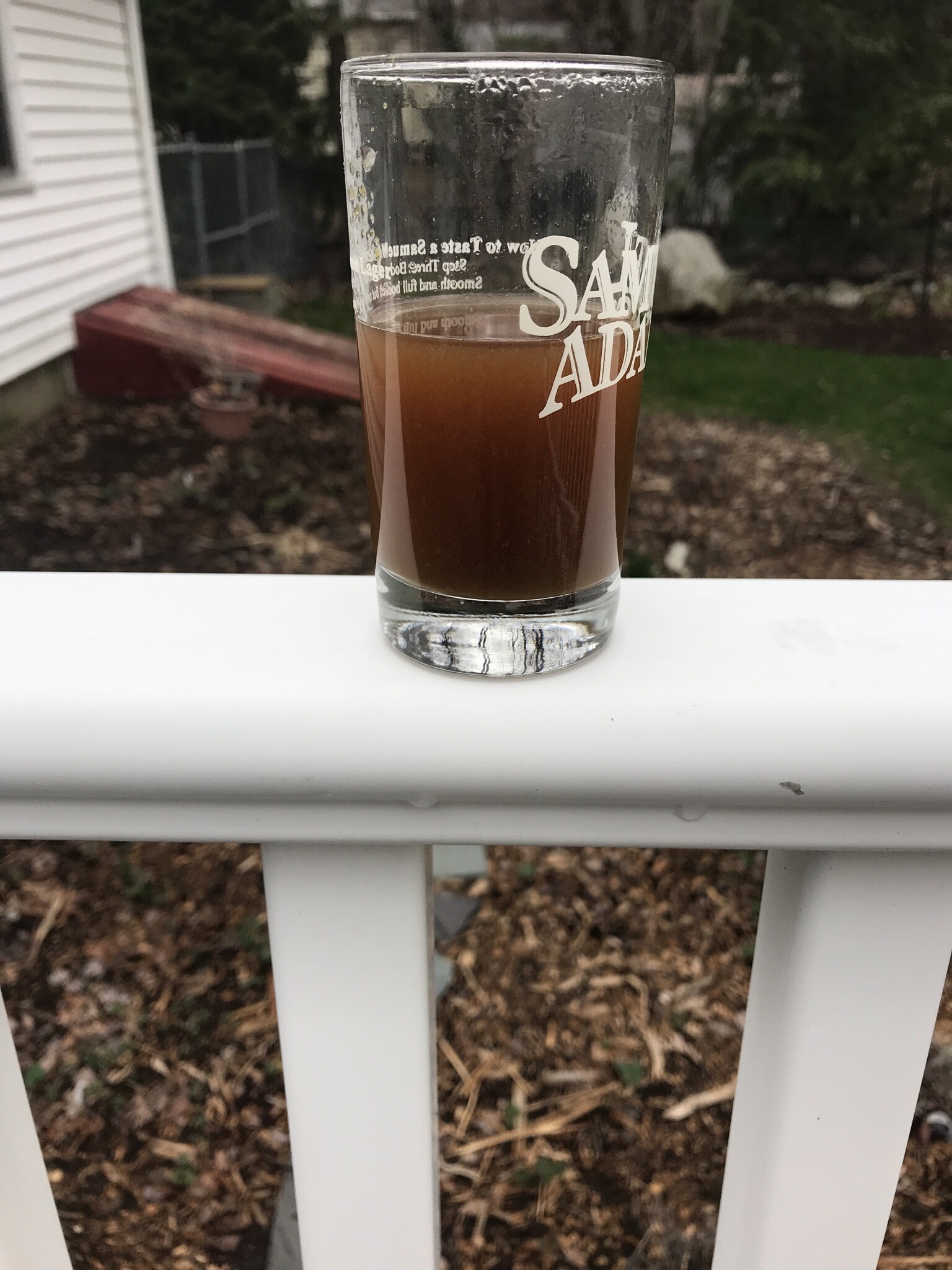
Here is the 5 gallon batch after fermentation was complete.

The color was lighter than I wanted, so I added an additional 10ml caramel to the priming sugar solution.
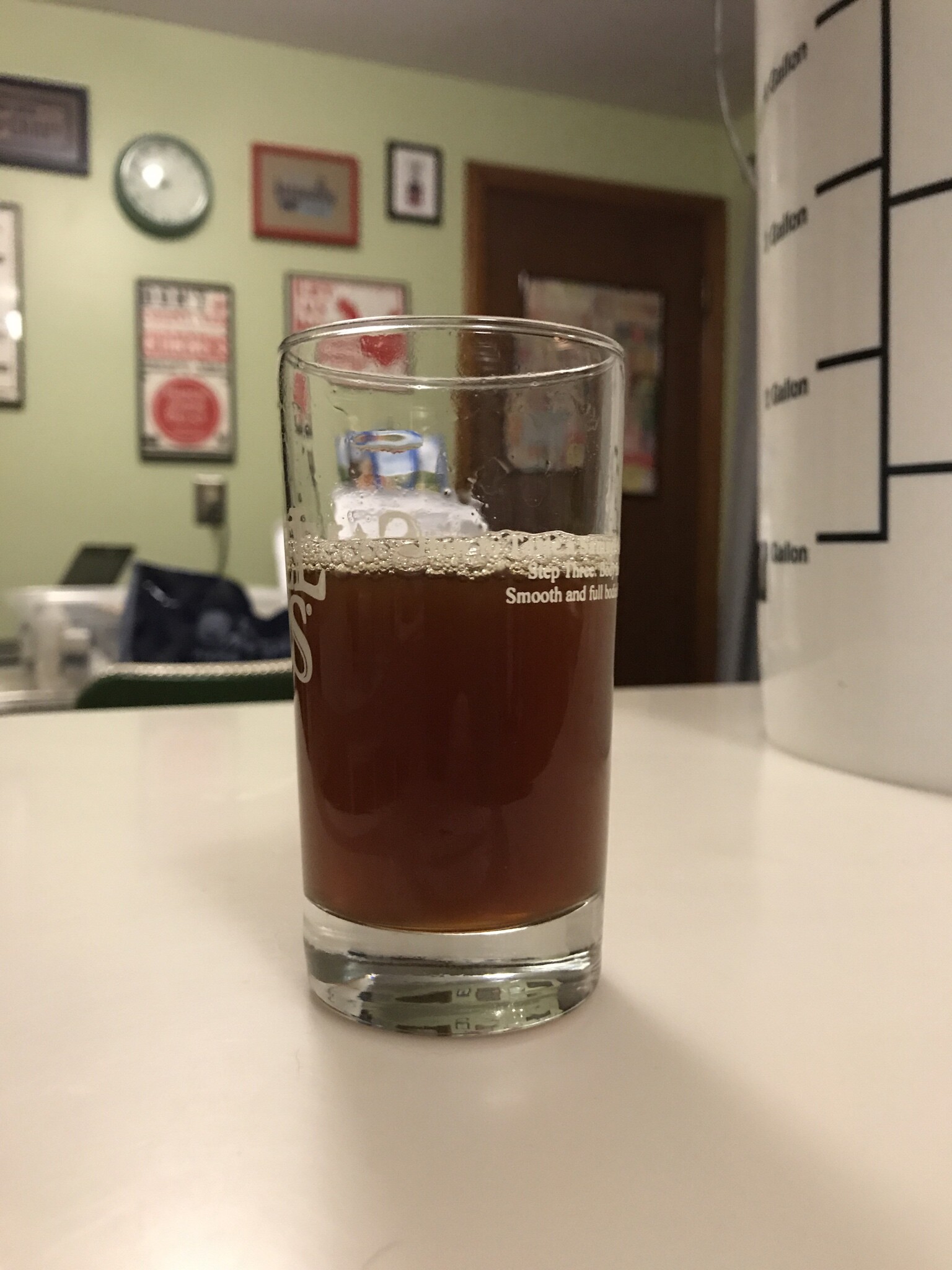
I’ll post a shot of the finished beer in a few weeks. This was brewed for a club quarterly style competition. I’m pretty sure I am the only one that brewed a traditional recipe, as opposed to a more modern recipe with roasted malts (same was true for our dark mild competition). Oh well. I won’t win, but I will enjoy drinking it.