Pitching rate effects (experimental results)

I’m not sure about the reason for this experiment. This experiment, along with a massive number like it (high/low gravity, yeast viability, generation mutations, etc) have been done. Not just done but done in a properly controlled lab setting. Kai and I have chatted about things like this quite a bit. Its a big pet peeve of mine for people to blindly do experiments without doing any basic research to see if anything like this has been done. Kai does a good job of finding original sources and then replicating the experiment to the best of his abilities. I’m not crapping on the effort here boys, what Im still wondering is that how this data is supposed to hold water. The vast majority of studies is not based on subjective analysis rather objective. Samples pulled are tested for numerous things along with being put on an HPLC to determine exactly what the differences are. Meaning levels of ethanol, isoamly alcohol, ethyl hexanoate, etc etc. There are tables that indicate sensory anaylsis of the human palate and the correlation with the amount of some chemical. Meaning that they can correlate the amount of X in a beer to the average human perception of it. My case in point: http://www.mbaa.com/TechQuarterly/Abstracts/1996/tq96ab09.htm Patino does some very good work.

Recently Chris White did a good job of summarizing high gravity fermentations of which pitch rate was talked about a lot:
http://www.ahaconference.org/presentations/2008/ChrisWhite_HighGravityFermentation.pdf

To this specific experiment, in my professional opinion, here are the biggest problems I see. This is not meant to bring down the one doing the experiment but to help them, and everyone else, where small changes can make very large effects:

  • vernacular - if one are going to do research use the terms that everyone uses in the industry. Pitching rate is always discussed at millions of cells/ ml not billions/ L.
  • yeast age - 52 days is very very old for a slurry even under the best conditions. CO2 toxicity is a big deal.
  • yeast count - Assuming number of cells in a ‘starter’ is an absolute no-no. If one doesn’t count the yeast, the experiment can’t be done.
  • yeast starters - the starters need to be done exactly the same way, same speed stiring, etc etc. Regardless of anything else, they should have at least been done together and then split at the very end.
  • Yeast viability -  Irregardless of your actual number you are pitching you have no idea of how viable they are (eg. methylene blue stain). Are you sending in old grannies or soldiers? Very important. Additionally, decanting starters is very hairy in that how much is too much to decant, how much did you lose etc etc.
  • Experimental controls - Three beers are needed. An underpitch, an over pitch and a ‘correct’ pitch. Two beers doesn’t give enough variables.
  • OG - Its just too high. What would be a yeast pitch rate experiment to one has change, instantly, to a yeast pitch rate of high gravity beers…unless you wanted to do a high gravity experiment but I didn’t read that.
  • Open fermentation and headspace - It wasn’t clear to me if this experiment was done fermenting ‘open’ in buckets or in buckets with a lid. If they were closed the head space was absolutely massive which could skew the experiment. Books have been written on ‘fermenter-head space’ specifics.
  • Yeast choice - The yeast type makes a massive difference in the outcome of the experiment.
  • Sensory evaluation - should have been done using a double blind test and not a triangle test. The double blind takes all of the bias out.
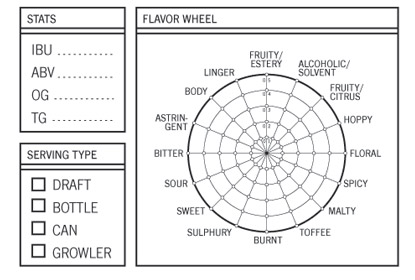
  • Format of sensory form - Its much easier to get good data but using a polar type plot for assessing peoples subjective perceptions. Also called a ‘spider plot’. http://www.appellationbeer.com/images/20091217-spider.jpg
  • Data presentation - the data should be presented in a histogram format with the average indicated. This way one can acutal see where each individual lands. A simple sd and T-test would be very easy to do if you did the spider plot.
  • Summary of the summary - Using a starter makes better beer. This had absolutely nothing to do with the actual experiment.

Yes this list is extensive but all the points I’ve listed are not exhaustive. They all need to be addressed for all experiments and not just this one. That’s why data is always peer reviewed. Point short, there is nothing I can ascertain from the data presented. There are too many holes for even the smallest assumption to be made.

This is the world I work in. When data is presented its up to the researcher to be able to support it. If someone doesn’t show people whats expected for make an actual assumption they we are all living ‘blind’ and will allow falsehoods to continue and hearsay to continue.

Cheers

Kristen

While I agree with Kristen on the importance of peer review we have to acknowledge that most of us don’t have access to most of the good papers. Though our experiments do oftentimes lack the control and precision of professional reseach I support and encurage them. Maybe at some point one of us runs into something “odd” that warrants better experients and reseach.

Kristen came up with quite a list of concerns. Many if which I totally missed. Though it may reduce the validity of the conclusion it’s good that you data was detailed enough to allow for this critique.

Cheers,
Kai

Well, it’s a big pet peeve of mine when people say “irregardless”.

That aside, I think this experiment was supposed to contribute some practical information about making a starter versus using average age yeast from an LHBS directly.  And while this is far too complex of a topic for generalizations without knowing OG, amount of aeration, and a number of other variables, I think it actually reflects homebrewing conditions better than most laboratory experiments.

So, it may not be that useful to the brewing chemists at Coors. Likewise, most of what they do is not useful to me.

+1

Drink something yellow and let’s be mellow, guys.  It’s just ideas we’re discussing.

Dr England’s comments regarding the poor scientific methodology employed with most zymurgological “studies” are accurate.
While detractors may argue that forums (fora, for you Latin purists) like this one and unscientific magazines like Zymurgy that primarily target the general public are not to be held to the same standards as professional, peer-reviewed articles and journals, both Kristin and Kai make good points about applying more rigorous scientific standards to any “studies” that do get published.

I applaud those who find the homebrewing hobby (or “obsession”) so fascinating that their childlike curiosity compels them to conduct an experiment.  But, most of these studies are quite poorly designed with regards to their hypothesis, materials and methods employed, the use of objective and standardized metrics, and arriving at unsupported and biased claims and conclusions.

As a homebrewer, I’d actualy respect your opinion more if you just wore flip flops and a loud tropical shirt and said, “Well… in my experience, underpitching yeast blah blah blah (insert your opinion here).”  Otherwise, it’s just dogma hiding behind the scrim of science.

“The greater the ignorance the greater the dogmatism.”

-Sir William Osler

Well, that’s slightly patronizing.  I agree with “Dr. England’s” last sentiment (and I’m not questioning his credentials, but the only professor I ever had who actually told us to call him “Dr.” was completely clueless) – that allowing word of mouth myths to perpetuate only harms the hobby.  But most of his objections are basically excuses to dismiss without even commenting. Not sure about the reason for this experiment?  Don’t be obtuse.  It you think that testing different procedure or ingredients in a homebrew setting with only “subjective” sensory analysis is a waste of time, just come out and say it.  But a useful contribution to making great beer is not necessarily the same as one that help us understand the metabolic pathways of yeast in a laboratory.

Your quote about dogmatic belief can apply to scientists as well.  I’m sure mathematicians smirk when they see biologists who are absolutely convinced they know what’s going on with life :wink:

Well said, in both posts Narvin. I’m not a ph.D or a Doctor and thank GOD I don;t wear flip flops or a loud tropical shirt but I thought the experiment was much  more approachable to the average homebrewer than some of the others I have seen, and was fairly well thought out as well.

+10

Most homebrewing experiments that people conduct are similar to this.  Brew up a batch, split it up and vary a single variable.  Try as hard as possible to keep everything else the same and see what happens.  After that it’s based on our perceptions to evaluate the results.  As mashweasel points out there are plenty of factors which can skew these kinds of results.

Sean went out of his way to keep the variables as stable as he could and then conducted a much larger tasting than most would.  And now he’s presenting his data to us.

Am I going to take the results as absolute gospel and go forth with no questions?  No, of course not.  But this was a very interesting and informative experiment and gave me several things to think about.  I think this was a great homebrewing experiment and I’m grateful for the information.

Guys,

The points I list are not meant to be comprehensive in the fact that they prove/disprove any data. They are thought points.

Narvin, you have a very good point. I don’t give indepth reasons for my points. I will absolutely go over point by point. That is a very good question. Just let me know what you think are the points I should cover and will. NP.

Every single publication offers free abstract’s. The links I give show this. Most other publications can be found freely. If not, then a simple email to the person doing the study is all thats needed for more information. Nearly every person I know would email back freely with additional input that can’t be read with plain ‘text’.

As for the ‘doctor’ business, I am also one that is much laid back and has, nor will, be called doctor. My title is well earned as is why I use it. Nothing more.

As for the ‘good enough’ theory of home brewing ‘experimentation’ that really needs to stop. Nearly all of the points I list are very simple things to cover. Nothing that requires a ton of ability or research. Additionally, I haven’t met a single home brewer that compares their wares to commercial products. We can’t have it both ways. We can’t say that our beers are better than the commercial thing but in the same breath say that we aren’t held to any standard of experimentation.

Guys, again, the entire purpose of this post was not to show what I can see that you can’t but to offer talking points in hopes that all the home scientists would see these things in future studies that they carry out. Its definitely not attacking the people carrying these out. I applaud these people.

Please continue the conversation and enough with the + (plus) agreements. State your questions. Thats how we all get better. My point rarely comes across the first time through of which I apologize. Kai and I have have had numerous conversations which entail this very thing. When one experiments in a vacuum one learns nothing.

Thanks for taking the time to respond in so much depth, Kristen. I did search for previous research in this area (I have access to a couple of the academic databases) and found some good papers, but they all dealt specifically with lagers, and none of them involved a large blind tasting. I’m sure those papers exist too and I simply don’t have access to them, but I think it’s important to keep in mind that most home brewers don’t have access to any of the literature at all.

I’d like to respond to a few specific points. For the rest I’ll defer to your superior knowledge and experience, and simply plead that I was working within the limitations of some very basic equipment.

I’m not sure why that would be the case. Is an experiment that has one control and one experimental group inherently invalid? I do have some training in conducting a controlled experiment and I’ve never come across a statement like that.

The OG was targeted to be at the high end of what White Labs and Wyeast say is “pitchable” for their standard (home brewer) products. Both manufacturers say a starter is only needed for OGs above 1.060.

The fermenters were sealed and you’re right, the head space is massive. Perhaps not ideal, but at least consistent between the two fermentations.

That’s snarky and unscientific and maybe even inappropriate, but it actually does speak directly to what the experiment is designed to assess - do home brewers prefer beers pitched at a standard rate, or at the pitching rate associated with using a smack pack directly?

I am disappointed to hear that you think that, since I respect and value your opinion. I guess all I can say is that I feel I learned some things as a result, and that those with a higher standard for proof will have to conduct their own experiments, or rely on the peer-reviewed literature.

“Only two types of guys wear Hawaiian shirts … and Bart doesn’t look like a big fat party animal to me!”

I too agree that the experiment itself is not invalid even though some of the parameters did not exactly match an actual 5 gal batch fermentation. The yeast amount could have been assed by its volume or the sediment weight.

I generally do side-by-sides where the beers are brewed 1 to 2 weeks apart. Though I’m aware that this is a problem I see these experiments as opportunities to find parameters that may be worth additional investigation or worth trying by other home brewers.

In the end it’s all about the coclusions that are drawn and how much is put into the results and how strongly the conclusion is worded.

BTW, if you look at the Chris White’s presentation you’ll notice that in his experiments some of the flavor active components actuallty increased with pitching rate.

Kai

In hindsight, that is something I wish I’d done, but my previous slurry volumes have matched up so well with the MrMalty predictions that I simply didn’t feel the need. Shortsighted, I know…

Thanks Sean, I thought it was a great article!

Folks, lets keep in mind that we are talking about beer.  While we all love it, the only thing that is truly important is taste, which is purely and wholly subjective (IMHO).

Great discussion and debate. Great points made by Kristen. Definitely more things to consider upon further trials.
There are so many variables to consider when conducting an experiment of this nature. I am thankful to all the folks who have participated and especially Sean for conducting this experiment however flawed it may or may not be. But even more important than that it’s what we have learned from this and how we will move forward as a community that counts. Keep up the great work!

Ill just address the points as we go by briefly summarizing.

Re data access – the ability to access high end journals can get very expensive. What is not expensive, but free is the access to the abstract to any article pretty much ever written. Abstracts definitely don’t tell the entire story but will give one a very good idea of what is in the paper. Its basically a short summary of what was done and the results. Google Scholar is a good tool for the beginner.

Re controls – At the very end of the experiment you make the claim about a starter is better (we’ll get to that later). However, to have an experiment that holds water one always needs an unmanipulated control. If you wanted to test the validity of making a starter then you would need a non-starter control.

Re OG – Both do claim that you can pitch either product into <1.060 wort. However you are doing an experiment for the number of yeast to be pitched and the effects therein. In order to do this one first needs to understand that high gravity brewing is a beast of its own. This was not your experiment which needs to be addressed. Don’t get me wrong, this in and of itself is very much an experiment but not what you

Re fermenters – you are correct. Both fermenters were the same which does take out the effects that the individual fermenter geometry would play. It doesn’t, however, take into account the fermentation kinetics of that much head space and how the fermentations react/behave as such. This is something that is very easy to fix but at the same time this would not in and of itself ruin the experiment.

Re the summary – I’m not being snarky but I understand what you mean so let me explain further. You may have known what you were trying to do but in your summary and presentation it focuses on the difference between pitch rate and nothing to do with using a starter. Moreover, the starter creation is flawed as I have said before. Add to this there was no non-starter control making there no way that one can draw any solid conclusions. Let me put it a different way. What if I was trying to see if it was faster to ‘go by foot’, to ride a bike or drive a car through London in the same manner this experiment is done? I would have the car and the bike only competing. The car finishing the fastest followed by the bike shows absolutely nothing to do with how long it takes to ‘go by foot’. Does that make more sense?

Re ascertaining new knowledge from this experiment – you make a statement I hear a lot, ‘…I learned some things as a result.’ You may very well have learned things as a result but what are those things? One never really every ‘proves’ anything when doing experiments only basically disproves things. Read back through your notes, see what you can find. Go back over my points and see what you can improve. One of the most important things that I haven’t touched on are the number of repeats you did with this experiments. Meaning how many of each did you do in duplicate, triplicate, etc. The reason we do this is b/c single experiments are inherently flawed. Even if you kept everything the same it would have been better to do 2 sets of 3 one gallon fermenters.

Re the ‘its only beer’ theory – If people put the time and energy into doing an experiment, they, just like me, don’t want to be wasting their time. On top of that people brewing beer don’t want to be wasting their time. I very much understand that a lot of this technical knowledge hasn’t been seen by the average home brewer. Any sort of experiment people love. However one needs to take everything with a grain of salt. Does it make sense? Was it carried out well? Etc etc. This may be only beer but don’t tell me that if some dude did an experiment saying that olive oil should be put into a beer and then there is really no need for oxygen that if the beer then went south and wasn’t shelf stable people wouldn’t be pissed! BTW – this last one happened. Research New Belgium olive oil. A dude wrote his Masters on it if I’m not mistaken.

Please keep up this conversation as it helps everyone out.

Kristen,

You are a man that speaks with profound confidence on this subject. You get my vote to set up the next experiment on Pitching rate effects. I still have to give Sean credit for his work. Whether he proved or disproved the theory, he did a great job.

I see you may be in the running for this years Ninkasi. Good Luck with that!

Kinda disappointed you didn’t address the flip flop, Hawaiian shirt conundrum…

I agree that if you’re doing an experiment, you should do it properly, or it’s not worth doing.  But I don’t think everything has to be in commercial / academic terms – no one here is trying to write a paper published in a journal.  What’s the point of talking about cell count if most homebrewers don’t have a hemacytometer?  Home-friendly units like starter size (as long as you can replicate the conditions – stir plate, 1.040 OG, pitched one tube of White Labs, etc) are “good enough” in the sense that the pitching rate will be within a range that provides similar fermentations to other homebrewers.  Of course you can’t pitch some old slurry from the back of your fridge and expect the same results, but there’s enough info on making starters that homebrewers should know this.

Is brewing a science?  Is it engineering?  Is it art?  It’s a little of everything, but in the end, what matters is that the beer tastes good, not that it has sound theoretical underpinnings.  A beer isn’t going to become invalid like a public key encryption algorithm if the prior research turns out to be wrong.  I don’t see any reason why science is a necessity to make a good beer that you can brag about and compare to the best commercial beers.  What about the cheese maker who knows nothing of the enzymes and molds that make the cheese, but knows exactly what to do and when to do it based on generations of trial and error?  Science can tell us why things are happening and help us to improve faster, and help to create consistency in large industrial settings, but it’s not the end all for making great beer.

I see, your concern is that I’m making a statement about starters when what was actually tested was the pitching rate associated with using a starter or not. You’re absolutely right about that, and it’s something I actually addressed briefly on the episode of Basic Brewing that will air tomorrow.

And by the way, I meant that I was being snarky (when I wrote that), not you.

I certainly wouldn’t claim that this experiment proves or disproves anything - the data can only support or fail to support a hypothesis. There’s no such thing as absolute proof. That fundamental fact doesn’t validate or invalidate the data though.

I do understand the importance of repeatability, but the one gallon fermenter idea seems a little impractical. If different tasters received beers from different fermenters, it would add an uncontrolled variable. And if each taster received beers from all three fermenters, it would demonstrate repeatability, but cut the sample size by a third.